Check out Redd at- http://www.reddvolkaert.net
Here’s Redd at the Dallas Guitar Festival 2014- We had a Real Good Time-
How about some more? This is from 2015-


Check out Redd at- http://www.reddvolkaert.net
Here’s Redd at the Dallas Guitar Festival 2014- We had a Real Good Time-
How about some more? This is from 2015-

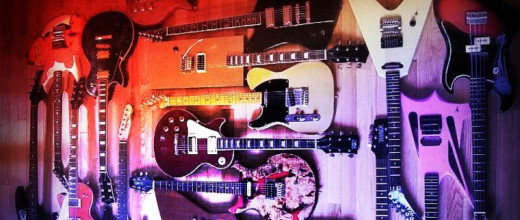
500 Words Cheap Guitars
I’m sure I’m not alone in this but I’ve often found myself fantasying about what guitars I would own if I had unlimited resources.
In my mind’s eye I own a vault’s worth of late 1950’s Gibsons and Fenders, a couple Tony Zemaitis, and some of pre-Beatle era Gretch for good measure.
Of course there would be a rehearsal room that had some classic Fender, Marshall and Vox amps to play through but because I’m a working guy my resources are limited.
I’ve had owned a couple of 50’s era guitars, a Gibson ES 125 and a Danelectro of some sort, but to be honest with you they both lived in their cases a greater amount of time than I actually played them.
As much as I liked them the two guitars had problems associated with vintage gear, such as underwhelming pickups, tuning stability and feedback.
Today I own a handful of guitars including my new favorite a Stewart-MacDonald pine body Telecaster. None of my guitars are what you would call “collectables” but instead they are a mix of functional off-the-shelf guitars set up to do a specific job.
As a player my ear and proclivity leans much more towards a vintage guitar sound but in order to capture more of that vibe I’m running a couple of vintage voiced amps with some relatively modern guitars.
I’m not going to fool myself to thinking that I can replicate vintage tones but I can at least live in a neighboring area code.
To me there are several reasons to buy a cheap guitar over a more expensive counterpart:
Most of the major brands offer lesser expensive versions of their premium level instruments.
Often times the lesser expensive versions can be found at a dramatic discount on the used market.
Playing live is risky because of the possibility of damage or theft.
They are a low risk alternative to buying collectables.
With a little massaging they can be star performers.
I can’t speak to your specific needs as a player but I can say even sub $500 can be dramatically improved having professional set up done either by a guitar tech or doing it yourself with guidance of several excellent home repair books.
Dan Erlewine’s “How To Make Your Electric Guitar Play Great!” is a very good guide even for non-professionals and so is “Complete Guitar Repair” by Hideo Kamimoto.
While there may be more after market pickups than you can shake a stick at don’t forget to change the pots and caps while you are at it. Replacing subpar pots and caps can radically improve the sound and response of even non-premium guitars.
Stickers on your guitar will always improve your tone too.
If you still aren’t noticing any improvement in tone you may want to buy a guitar cable suitable to the genre of music you play and even trying a different gauge of pick. “Cheap” doesn’t need to mean “bad”.
Adam P Hunt is a freelance writer who has previously written for The Library Journal and Premier Guitar Magazine. We are so happy to have him join us here at Guitar Radio Show.com.
Check out Nico’s USA Pickups- http://www.nicosusapickups.com
Here’s our review on Nico’s USA Pickups-
Experience Tone-
Hey Check out our review on some of the coolest Strat pups we’ve played in long while. Aw Yeah!!!

For more info on Dario go to- http://www.dariolorina.com
500 Words Fender Champ Amps by Adam Hunt
The Fender Champ loved by players around the world. It’s distinctive sound was made famous by Eric Clapton’s work on the singular Derek and the Dominos album. Despite it’s diminutive size it punches above its weight in studio settings.
Prior to establishing Fender Musical Instruments in 1946 Leo Fender and Clayton “Doc” Kauffman ran a short-lived music company called K&F in 1945. Originally launched in 1948 as the Champion“800” I’m sure that the Champ’s origins stretch back to Leo Fender’s days with K&F.
According to amp repairman and tube amp historian, Aspen Pittman, the earliest versions of the K&F amps were not equipped with a tone and volume control because both the tone and volume were controlled by the lap steel guitar that was sold with the amp.
The omission of dedicated tone and volume controls however was not an uncommon practice for amps that were produced during the late 1940s.
Looking at the topography of K&F “lunchbox” amps and the original “tweed” Champs the similarities are striking. Both the “800” and the K&F “lunchbox” had a simple tone/volume layout, a single 8” speaker, pine cabinet, 5Y3 rectifier and a 6V6 power tube that put out a staggering 4 watts of power.
Throughout the years the venerable Champ went through many changes in terms of cosmetics, speaker size, wattage and features. Despite these changes the Champ remains a portable, affordable and beloved musical partner.
So well liked in fact “The Tube Amp Book” author Apen Pittman considers the 1958 version of the Champ as one of his picks as one of the top ten all time classic amps.
Pittman was keen to point out why the Champ has remained so popular was its nearly unrivaled ability to distort at a low volume making it mic friendly in recording situations.
But as the years had progressed the Champion “800” eventually transformed itself into something resembling a lower priced Princeton. Not that that’s a bad thing but those interceding changes does mean the Champ has lost some of it’s unique characteristics.
Fear not, however, for players wishing to capture the sounds of early rock ‘n’ roll or gutbucket blues both VaulveTrain and Victoria make some stunning modern versions of Fender “tweed” style amps.
For those that have slightly less deep pockets used Fender “tweed” reissues can also be found for a reasonable price online.
As a player I find there’s a raw excitement in plugging into something like a Champ because there simply isn’t any hiding. Every bend, every flub, becomes immediately apparent. Champ style amps also force a player really concentrate on squeezing the most out of each note if you want to get the guitar to sing. I also think that without regard to stylistic choice any player can benefit by practicing with a Champ style amp.
Any one who is looking for an affordable vintage voiced amp may also want to check out a Champ because a modern, high gain, amp may not capture that vintage vibe you are looking for.
Check ‘em out.

For more info on Jennifer and “Self Empowerment For The Modern Musician Experience” go to- http://www.jenniferbatten.com
or- http:/http://www.batten.com/Current-Shows.html